Introduction
Bringing an older rescue dog home can be incredibly rewarding, but crate training may become challenging when fear, anxiety, or an unknown history is involved. Learning how to crate train an older rescue dog with separation fears and phobias requires a very different mindset from simply putting a dog into a crate and waiting for them to settle.
An older rescue may have never seen a crate, may associate confinement with something frightening, or may become distressed whenever their person leaves. In these situations, the goal is not merely to keep the dog contained. The goal is to help the dog feel safe enough to voluntarily relax in the crate.
Older dogs can absolutely learn new routines, including comfortable crate use. However, dogs with significant separation anxiety or confinement phobia may need professional behavioral support rather than conventional crate training.
The most successful approach combines patience, positive reinforcement, careful observation, and extremely gradual progress.
Why Crate Training an Older Rescue Dog Can Be Difficult
An adult rescue dog comes with a history you may not know. Perhaps the dog lived freely indoors, spent time outdoors, was transported frequently, or was previously confined for long periods. You cannot assume that a crate means the same thing to your new dog as it does to a puppy raised in a home.
This is one reason how to crate train an older rescue dog with separation fears and phobias should begin with observation rather than confinement.

Watch what happens when your dog approaches the crate. Does the dog investigate it calmly? Avoid eye contact with it? Back away? Tremble? Bark? Try to escape?
These reactions tell you how difficult the next step should be.
Older dogs may also have physical considerations. Arthritis, stiffness, reduced vision, hearing changes, or other age-related problems can make a poorly positioned or uncomfortable crate more stressful. Comfortable bedding and adequate space become especially important for senior dogs.
Understand the Difference Between Separation Anxiety and Crate Fear
Before starting, determine what actually triggers your dog’s distress.
A dog with crate fear may become anxious as soon as the crate door closes, even when you remain nearby. A dog with separation anxiety may be comfortable in the crate while you are present but panic when you leave.
Some dogs experience both.
This distinction matters because a crate cannot automatically cure separation anxiety. In fact, confinement can increase distress in some dogs. Dogs experiencing severe panic may attempt to escape, injure themselves, or become increasingly fearful.
Signs that deserve serious attention include frantic escape attempts, excessive panting, drooling, persistent vocalization, shaking, destructive behavior, or attempts to injure themselves.
If your dog displays these behaviors, don’t simply increase crate time. Speak with a veterinarian or qualified behavior professional about an individualized plan.
Prepare the Crate to Feel Safe
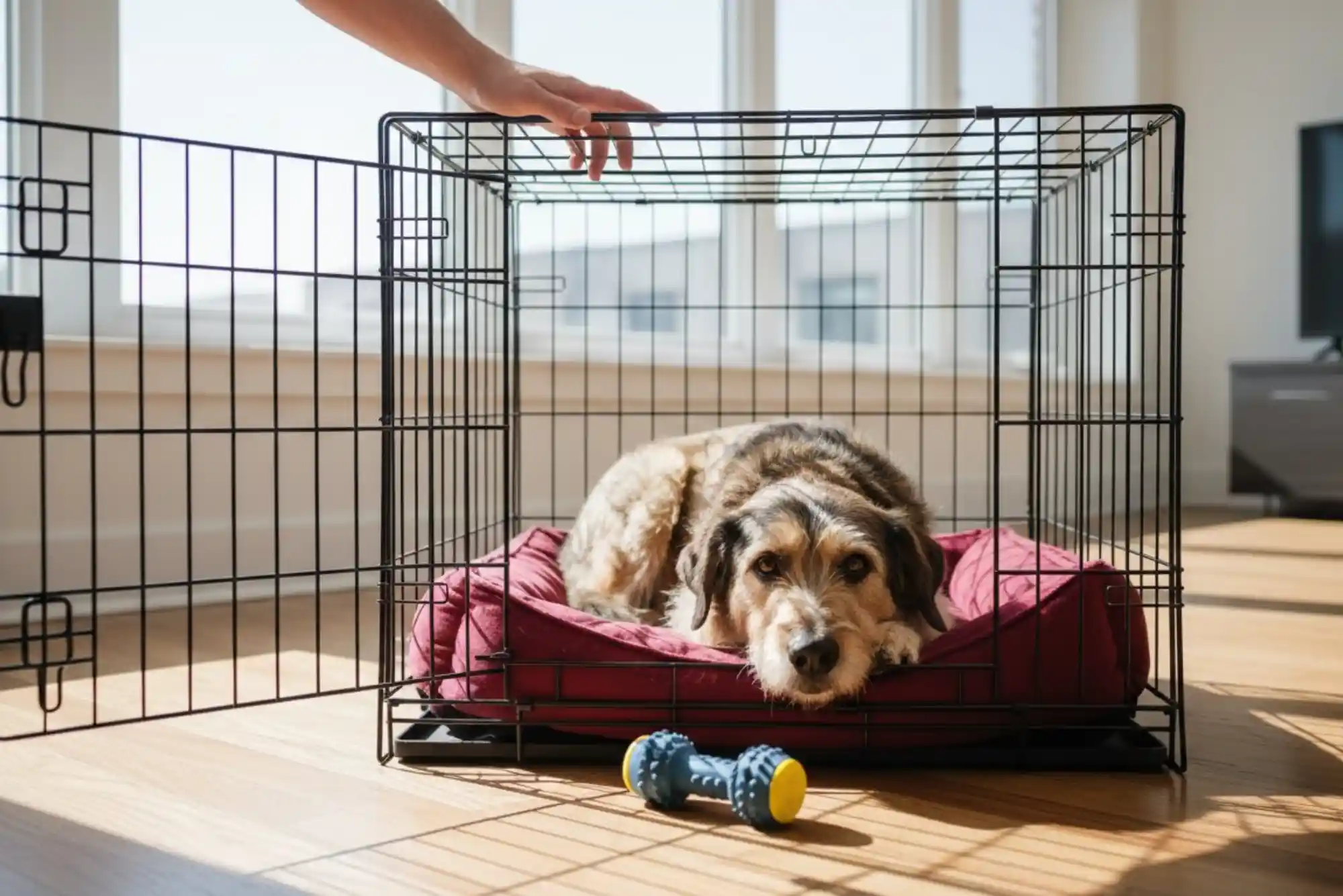
The crate should feel like a comfortable resting area rather than a punishment zone.
Choose a crate that allows your dog to stand, turn around, lie down comfortably, and change positions. Older dogs may benefit from supportive bedding, provided they do not chew and swallow it.
Place the crate somewhere calm but not completely isolated from household activity. Many rescue dogs feel safer when they can see and hear their people.
Leave the door open initially. Your dog should be able to investigate without feeling trapped.
You can place a favorite blanket, safe toy, or food reward nearby. If your dog already enjoys a particular chew or food toy, it can help create a positive connection with the crate.
Most importantly, never force a frightened dog inside.
Start With the Door Open
The first stage of how to crate train an older rescue dog with separation fears and phobias may not involve closing the door at all.
Let the crate simply exist.
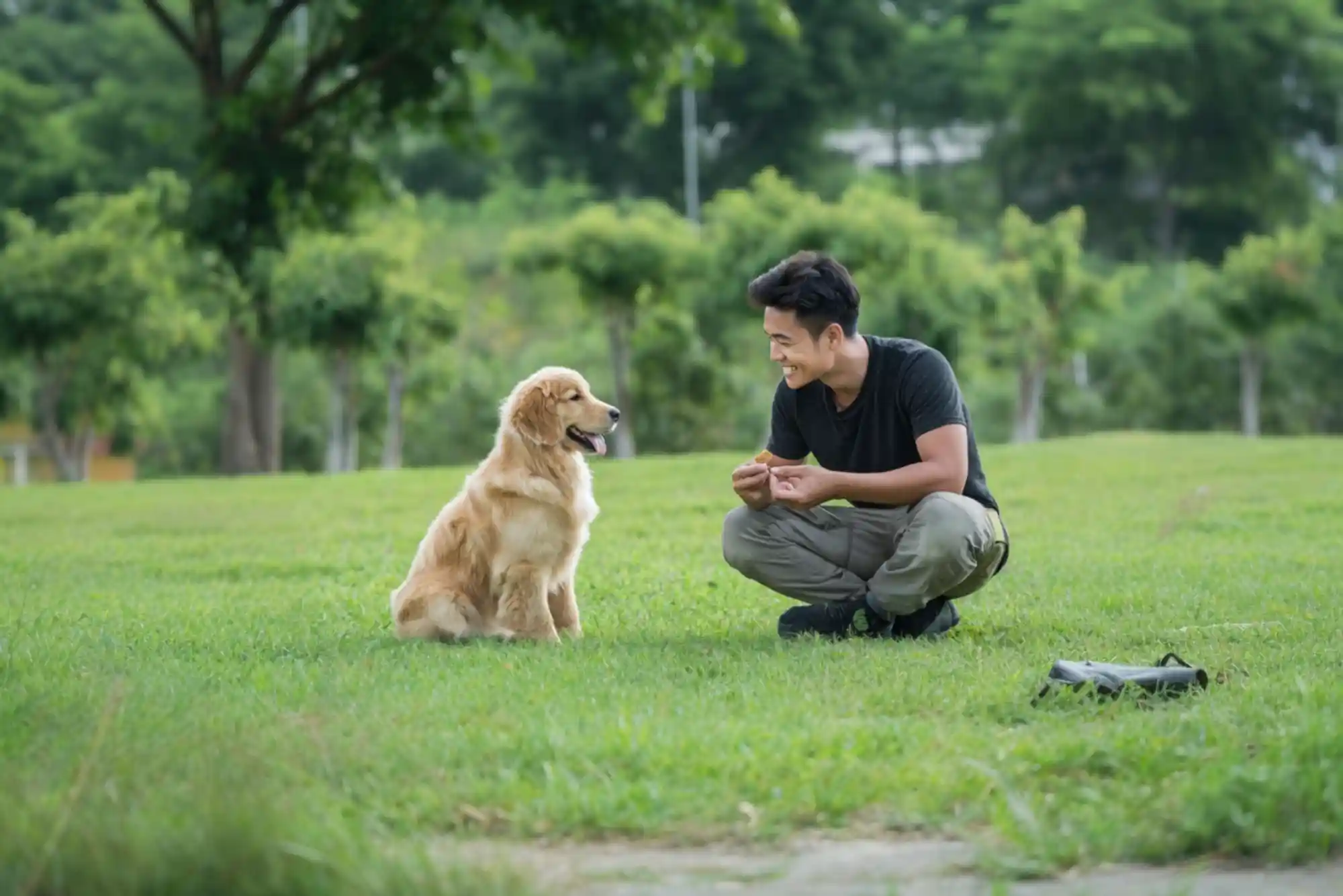
Reward your dog for looking toward it, approaching it, sniffing it, or eventually stepping inside voluntarily. You do not need to push the process forward because your dog enters once.
Think in terms of tiny victories.
If your dog puts one paw inside, that is progress. If the dog walks completely inside and immediately comes back out, that is still progress. Over repeated sessions, the dog can learn that entering the crate predicts something pleasant.
Feeding meals inside the crate can also build positive associations when the dog is already comfortable enough to eat there. If your dog refuses food because of fear, don’t use food to pressure them into confinement.
Build Positive Associations Before Closing the Door
Once your dog voluntarily enters the crate, encourage calm behavior inside.
You might provide a food puzzle, safe chew, or meal while the door remains open. Allow your dog to finish and leave whenever they choose.
This teaches an important lesson: the crate does not mean the dog has lost control of the situation.
Over time, your dog may begin entering the crate independently to rest. That is a particularly valuable sign because it shows the space is becoming familiar rather than frightening.
Avoid turning every crate visit into a training exercise. Sometimes the best thing you can do is allow the dog to nap inside with the door open.
Introduce the Crate Door in Tiny Steps
Closing the crate door is a major milestone for a fearful rescue dog.
Start with something extremely brief. While your dog is relaxed inside, move the door slightly and immediately open it again. Reward calm behavior.
If that goes well, close the door for a second or two.
Then open it.
The exact number of seconds is less important than your dog’s response. The objective is to finish each repetition before anxiety begins.
Gradually increase the duration only when your dog remains relaxed. If the dog begins whining, scratching, panting, or attempting to escape, you’ve probably progressed too quickly.
Return to an easier step and rebuild confidence.
This gradual approach is consistent with recommendations for older dogs: introduce the door slowly, increase duration carefully, and avoid forcing the dog to tolerate distress.
Practice While You Are Still in the Room
Do not combine every challenge at once.
A common mistake is closing the crate and immediately leaving the house. For a dog with separation fears, that can make the experience overwhelming.
Instead, remain nearby.
Sit on the sofa while your dog rests in the crate. Read, watch television, or work quietly. Occasionally reward calm behavior.
Once your dog can relax with the door closed, begin moving around the room.
Walk a few steps away.
Return.
Walk toward another room.
Return.
Your dog is learning that your movement does not automatically mean abandonment.
Only after these steps are easy should you begin brief out-of-sight practice.
Increase Distance Before Increasing Time
When learning how to crate train an older rescue dog with separation fears and phobias, think about distance and duration as separate challenges.
If your dog can remain relaxed for five minutes while you sit nearby, that does not necessarily mean they can handle five minutes alone.
Start with very short absences.
Walk out of sight and immediately return. If your dog remains calm, repeat it. Gradually increase the duration.
Your goal is to return while your dog is still comfortable rather than waiting until the dog reaches panic.
This is particularly important for separation-related problems because repeated exposure to overwhelming distress can make training harder rather than easier.
Keep Departures and Returns Boring
Dogs with separation fears often become sensitive to signals that predict departure.
Picking up keys, putting on shoes, grabbing a bag, or walking toward the door may become anxiety triggers.
Keep departures calm and predictable.
Avoid emotional goodbyes. When you return, avoid creating an enormous celebration immediately. A calm routine can help reduce the contrast between “person here” and “person gone.”
You can also practice departure cues without actually leaving. Pick up your keys, sit down, and continue your normal activity. Put on your shoes and make coffee.
These exercises can help your dog learn that these signals do not always mean a long separation.
Help Your Older Dog Manage Phobias
Phobias can make crate training more complicated.
A dog may fear thunderstorms, fireworks, unfamiliar sounds, visitors, darkness, transportation, or particular environments. If the crate is introduced while the dog is already highly frightened, the dog may associate the crate with the frightening event.
Instead, practice crate relaxation during calm periods.
If the crate is intended to become a safe retreat during storms or fireworks, establish that association well before the next frightening event. A crate should never become the place where a dog is forcibly confined during something terrifying.
Some dogs prefer a partially covered crate, while others become more anxious when their view is blocked. Let your dog’s body language guide you.
Watch Your Dog’s Body Language
Successful crate training is not measured by silence alone.
A dog can become quiet because they are relaxing, but they can also become quiet because they have stopped attempting to escape.
Look for relaxed body language.
A comfortable dog may lie down, stretch, sigh, chew calmly, rest their head, or fall asleep. They may voluntarily return to the crate later.
Stress can appear as pacing, persistent panting, drooling, trembling, frantic scratching, repeated attempts to escape, or refusal of normally appealing food.
If your dog is showing escalating stress, stop increasing the difficulty.
The answer is usually not “make them stay longer.”
Never Use the Crate as Punishment
One of the fastest ways to damage crate training is to use the crate after unwanted behavior.
If your dog chews furniture, barks, has an accident, or steals food, sending them into the crate as punishment teaches them that the crate predicts unpleasant consequences.
The crate should instead remain associated with rest, safety, food, quiet time, and predictable routines.
This is especially important with a rescue dog whose previous experiences may already be uncertain. A positive association gives the dog a reason to choose the crate voluntarily.
Know When the Crate Is Not the Right Solution
Not every older rescue dog needs to be crate trained.
If your dog experiences severe separation anxiety, confinement may make the problem worse. Some dogs are calmer in a dog-proofed room, behind a baby gate, or in another secure area where they have more freedom of movement.
A crate should be considered a management and training tool, not a universal treatment for anxiety.
If your dog has injured themselves attempting to escape, repeatedly experiences panic, or cannot remain calm even during very short sessions, stop trying to solve the problem through crate training alone.
A veterinarian can check for medical factors that may contribute to anxiety, while a qualified behavior professional can help develop a gradual behavior-modification plan. In some cases, veterinary treatment and behavior work are used together.
Common Mistakes That Slow Progress
The biggest mistake is moving faster than the dog can handle.
Another common problem is assuming that whining always means stubbornness. With a fearful rescue, vocalization may be communication that the dog is struggling.
Avoid using “cry it out” as a blanket strategy. Persistent distress is different from brief frustration, and severe panic should not be treated as something a dog simply needs to endure.
Do not immediately aim for hours of confinement. First teach the dog that the crate is safe for short periods.
Also avoid comparing your dog with another dog. One older rescue may learn to relax in a crate within days, while another may need weeks or longer. Previous experience, temperament, health, and anxiety level all influence the process.
How Long Does Crate Training an Older Rescue Dog Take?
There is no universal timetable.
A confident adult dog with no history of confinement may adapt relatively quickly. A fearful rescue with separation anxiety or a traumatic history may require much more gradual work.
Instead of asking whether training should take seven days or three weeks, measure progress by behavior.
Is your dog entering voluntarily?
Can they relax with the door open?
Can they remain comfortable when the door closes?
Can they settle while you move around?
Can you briefly leave the room without triggering panic?
These milestones provide a much more useful measure of success than a calendar.
Build Safety Before You Build Duration
Learning how to crate train an older rescue dog with separation fears and phobias is ultimately about building trust.
Your dog does not need to love the crate on the first day. They need to learn, step by step, that entering it does not mean being trapped, punished, or abandoned.
Start with an open door. Reward voluntary behavior. Build duration slowly. Practice separation in tiny increments. Pay attention to body language, and never confuse panic with disobedience.
Most importantly, remember that the crate is a tool, not a cure for separation anxiety. If your rescue dog experiences severe distress or attempts to injure themselves, get professional help rather than pushing through the problem.
With patience, consistency, and the right support, an older rescue dog can learn new routines and develop genuine confidence in a safe resting space.
FAQs
Is it too late to crate train an older dog?
No. Older dogs can learn to become comfortable with crates. Age itself is not a reason to abandon crate training. The process may simply require more patience because an adult rescue can have established habits, preferences, or negative experiences.
How do you crate train a dog with separation anxiety?
Start by determining whether the dog is afraid of the crate itself or becomes distressed specifically when separated from you. Introduce the crate with the door open, reward voluntary entry, and gradually build comfort before introducing brief separations. Severe separation anxiety should be addressed with veterinary or qualified behavioral support because crating alone does not treat the underlying condition.
Should I let my dog cry it out in the crate?
Persistent crying, frantic scratching, heavy panting, drooling, or escape attempts should not simply be ignored. These behaviors can indicate significant distress. Reduce the difficulty and return to a stage where your dog can remain calm.
How do I get my older dog to like the crate?
Make the crate predictable and rewarding. Allow voluntary entry, provide comfortable bedding, offer meals or appropriate food enrichment when your dog is comfortable, and avoid using the crate for punishment. The goal is to make the crate a place your dog chooses to rest.
Can an older rescue dog with a phobia be crate trained?
Potentially, but the phobia must be considered carefully. If the dog panics around confinement or has a history of traumatic experiences, forcing crate exposure can worsen fear. A qualified professional can help determine whether crate training or another safe-space arrangement is more appropriate.
How long can an older dog stay in a crate?
There is no single duration that is appropriate for every dog. Age, health, bladder control, exercise needs, anxiety, and individual tolerance all matter. Crates should not be used as a way to leave an anxious dog confined for an entire workday. Older dogs in particular need appropriate opportunities for movement, toileting, interaction, and comfort.