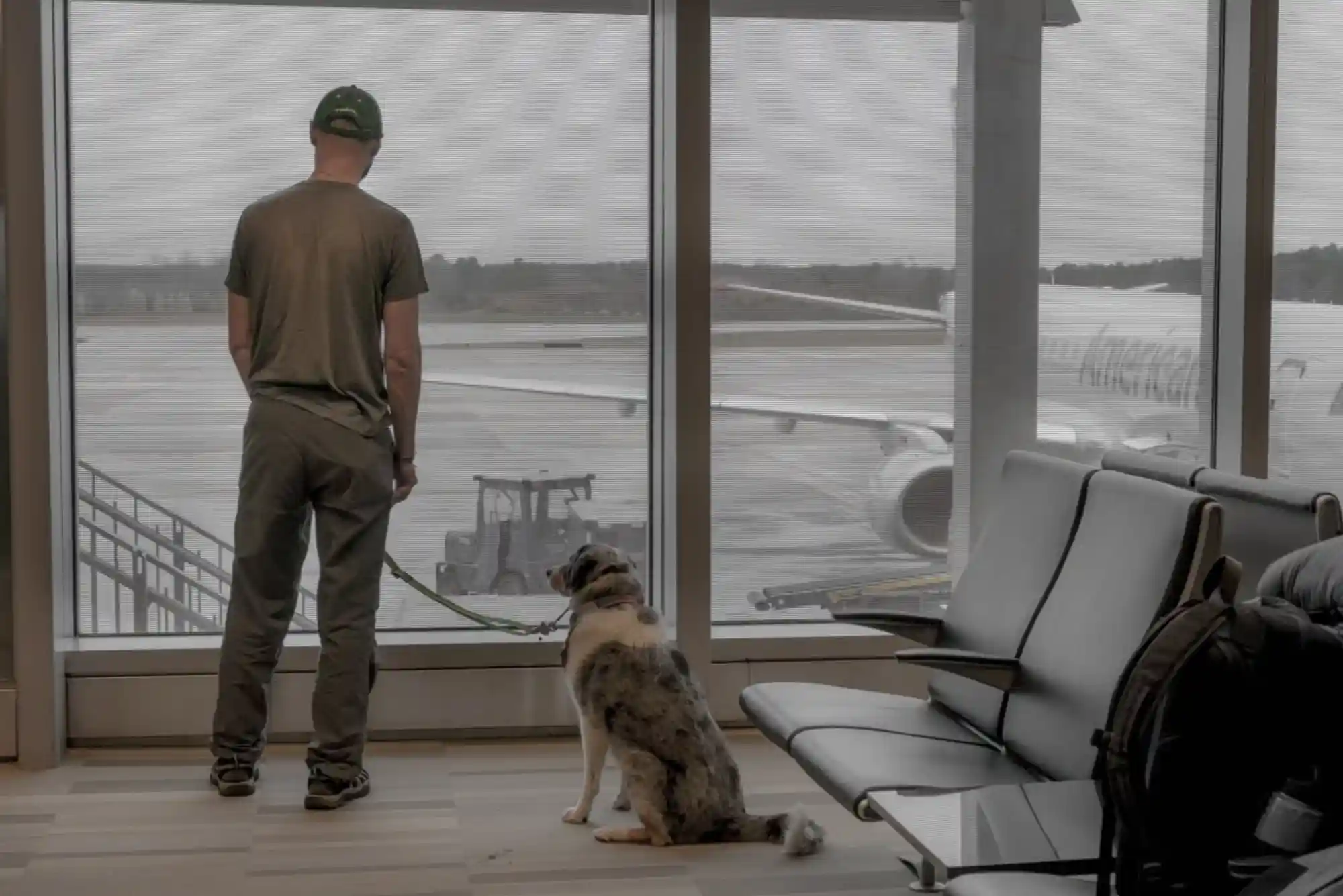
Introduction
Flying internationally with a dog requires more planning than a normal holiday. Airlines, destination countries, transit countries, and veterinary authorities can all have different requirements. Therefore, preparing early can help prevent stressful delays at the airport.
If you are wondering How to Fly Internationally with a Dog: Cabin Dimensions, Pet Passports, and IATA Rules, start by checking your destination’s official import requirements. You should then confirm your airline’s pet policy, prepare the required veterinary documents, and choose an airline-approved carrier.
International dog travel may involve microchipping, rabies vaccination, health certificates, parasite treatments, and specific entry permits. Some destinations may also require blood tests or quarantine arrangements. The exact process depends on where your dog is traveling from and where your dog will arrive.
How to Fly Internationally with a Dog
The first step is researching the rules of your destination country. There is no single worldwide document that allows every dog to enter every country. Each destination establishes its own animal health and import requirements.
For travelers leaving the United States, USDA APHIS recommends contacting a USDA-accredited veterinarian as soon as the international trip is planned. The veterinarian can help determine the destination’s requirements, including vaccinations, tests, treatments, and health certificates.
You should also check every country where your dog will enter or transit. A transit stop can sometimes create additional documentation requirements. Therefore, a direct flight may be easier when it is available and suitable for your trip.

Your airline’s rules are equally important. A dog can satisfy a country’s entry requirements but still fail to meet an airline’s boarding requirements. Airlines can set their own rules for cabin carriers, weight limits, breed restrictions, documentation, and availability.
Understand Cabin Travel Before Booking
Many owners prefer cabin travel because their dog remains close to them throughout the flight. However, cabin travel depends heavily on the airline and the dog’s size.
Airlines generally require a dog traveling in the cabin to remain inside an approved carrier. The carrier usually needs to fit underneath the seat in front of you. Because under-seat space varies between aircraft, you should never assume that one carrier works on every airline.
The airline should confirm the maximum carrier dimensions before you purchase your ticket. Aircraft type can also affect the available space. A carrier accepted on one aircraft may not fit beneath another aircraft’s seat.
Some airlines also limit the number of pets allowed in the cabin. Consequently, you should reserve your dog’s space as early as possible. Purchasing your own ticket does not always automatically reserve a place for your dog.
IATA Cabin and Container Dimensions
IATA provides internationally recognized guidance for transporting dogs and cats. However, IATA guidance does not replace an airline’s individual pet policy.
For an appropriate container, IATA explains that the animal must have enough room to stand naturally, turn around, sit, and lie down comfortably. The container should also account for bedding when determining internal height.
IATA’s container guidance uses several measurements from the dog. These include the dog’s body length, elbow height, shoulder width, and standing height. The resulting measurements help determine an appropriate container size.
For larger dogs traveling in the aircraft hold, these measurements become particularly important. The container needs adequate internal space rather than simply matching the dog’s body dimensions.
However, cabin carriers are different from larger cargo containers. Your airline may provide specific maximum dimensions for cabin travel. Therefore, always compare the carrier’s external dimensions with the airline’s current requirements.
Choosing the Right Dog Carrier
Choosing the right carrier is one of the most important parts of international dog travel. Your dog should be comfortable inside it before travel day.
Start carrier training several weeks before departure. Place the carrier in a familiar part of your home and allow your dog to investigate it naturally. Gradually encourage your dog to spend longer periods inside.
A carrier should not become associated only with stressful events. Instead, use familiar bedding and positive experiences whenever appropriate.
For cabin travel, remember that the carrier may need to remain closed under the seat for much of the flight. Your dog should therefore be comfortable staying inside for the expected travel period.
For checked or cargo transportation, container requirements can be more extensive. IATA guidance is particularly important for selecting an appropriate container for animals traveling in the aircraft hold.
Do Dogs Need a Pet Passport?
The term “pet passport” can mean different things depending on the country.
For example, the European Union uses an official European pet passport for eligible travel between EU countries and Northern Ireland. The document records identification information and important health details, including rabies vaccination information.
The United States does not issue a universal international pet passport. Instead, dogs traveling internationally may need destination-specific health certificates and supporting veterinary records.
USDA APHIS specifically states that there is no single U.S. pet passport for international travel. Each destination establishes its own requirements.
Therefore, do not rely on a generic “pet passport” sold online. The correct documents depend on the countries involved in your journey.
Microchip and Rabies Requirements
Microchipping is an important part of international dog travel. Many countries require dogs to have an approved identification microchip.
The timing of the microchip can also matter. For example, EU rules require the dog to be identified before the rabies vaccination is administered for the vaccination to qualify under the relevant travel rules.
Rabies vaccination is another major requirement. Some countries require a valid rabies vaccination before entry. Others can require additional waiting periods or rabies antibody testing.
EU rules provide an example of how timing can affect travel. A primary rabies vaccination generally requires a waiting period before travel. Additional rules can apply when traveling into the EU from certain non-EU countries.
Because these rules can change, your veterinarian should confirm the exact vaccination timeline for your route.
International Health Certificates for Dogs
A health certificate may be required before your dog can enter another country. It generally confirms that your dog has met specified health and vaccination requirements.
If you are traveling from the United States, USDA APHIS explains that many countries require an international health certificate. The certificate must be completed by a veterinarian, and some destinations require USDA endorsement.
The timing is extremely important. Some certificates are accepted only for a limited period. Therefore, obtaining the certificate too early can be just as problematic as obtaining it too late.
USDA APHIS recommends beginning the process as soon as possible because international pet travel requirements can take weeks or even months to complete.
Your veterinarian can help coordinate examinations, vaccinations, laboratory tests, treatments, and paperwork according to the destination’s timetable.
IATA Rules for Flying With Dogs
IATA publishes guidance for the safe transportation of live animals. Its recommendations cover appropriate containers, animal comfort, preparation, and air transportation practices.
One important principle is that dogs should have enough space to stand, sit, turn around, and lie naturally inside their container. IATA also states that dogs and cats should generally be at least eight weeks old and fully weaned before air travel, although airlines can impose higher age requirements.
IATA guidance should not be confused with an airline ticketing policy. IATA provides industry standards and guidance, while the airline determines whether it accepts pets and under what conditions.
This distinction is important because airline requirements can be stricter. Always verify the current rules directly with the airline before traveling.
Preparing Your Dog for the Flight
Successful international dog travel involves more than paperwork. Your dog also needs to be physically and behaviorally prepared.
Start carrier training well before departure. Short practice sessions can help your dog become familiar with the carrier. Gradually increase the duration as your dog becomes comfortable.
You should also discuss the trip with your veterinarian. Your veterinarian can evaluate whether your dog is suitable for air travel and identify any concerns that require attention.
Do not give your dog medication for flight anxiety without veterinary guidance. Sedation can create additional risks during transportation, particularly when the animal cannot be closely monitored.
Food and water planning also matters. Follow your airline and veterinarian’s instructions about feeding before travel. Avoid making major dietary changes immediately before departure.
What Documents Should You Carry?
International travel documents should be organized before leaving home. Keep original documents where required, rather than relying only on photographs stored on your phone.
Depending on the route, documents can include vaccination records, microchip information, health certificates, laboratory results, import permits, parasite-treatment records, and airline forms.
You should also keep copies of important documents separately. A digital backup can be useful, but it should not replace original paperwork when authorities require originals.
If you are returning to the United States, pay special attention to U.S. entry requirements. CDC requirements can apply to dogs entering or returning to the country, including U.S.-origin dogs that have traveled abroad.
International Transit Can Change the Requirements
A common mistake is checking only the final destination. Your dog may also need to meet requirements for a transit country.
This becomes particularly important when changing airports or leaving the international transit area. The rules can depend on the length of the stop and whether your dog enters the country.
USDA APHIS advises travelers to consider the requirements of additional countries along their route.
For this reason, direct flights can simplify the process when practical. If a connection is unavoidable, investigate the transit requirements before booking.
How Early Should You Prepare?
Start planning several months before international travel whenever possible. Some routes are straightforward, while others involve multiple steps and waiting periods.
Your first task should be identifying the destination’s official requirements. Then speak with a qualified veterinarian about the required timeline.
After that, confirm the airline’s pet policy and cabin carrier dimensions. Do not wait until the airport to discover that the carrier is too large or the pet reservation was not confirmed.
A good approach is to create a personal travel timeline. Record vaccination dates, testing deadlines, certificate windows, airline confirmation, and departure dates.
This approach reduces the risk of missing a requirement that has a strict validity period.
Common Mistakes When Flying Internationally With a Dog
One frequent mistake is assuming that an ordinary vaccination record is enough. International travel often requires specific documentation and timing.
Another mistake is buying a carrier based only on its advertised airline compatibility. Airlines can have different restrictions, so confirm the exact dimensions for your flight.
Travelers can also overlook transit-country requirements. A connecting flight may introduce another set of rules.
Finally, some owners leave paperwork until the final week. This can be risky because laboratory testing, veterinary certificates, government endorsement, or import permits may take time.
Planning early gives you more opportunity to correct problems before departure.
FAQ
Can I take my dog on an international flight?
Yes, dogs can travel internationally, but acceptance depends on the airline and destination. Your dog must meet the destination’s animal-entry requirements. The airline may impose additional requirements for cabin or cargo travel.
What size carrier is allowed for a dog on a plane?
There is no universal cabin carrier size for every airline. The carrier must usually fit beneath the seat and allow appropriate ventilation and animal comfort. Confirm the exact external dimensions with your airline before buying a carrier.
Does my dog need a passport to fly internationally?
Not always. Requirements depend on the destination. EU pet passports are used for qualifying travel within the EU and Northern Ireland. The United States does not issue a universal international pet passport.
What documents does my dog need for international travel?
Your dog may need a health certificate, vaccination records, microchip information, and additional documents. Some destinations also require laboratory tests, import permits, or parasite treatments.
How long does an international pet health certificate last?
The validity period depends on the destination country’s rules. Some certificates have short validity windows. Therefore, your veterinarian should schedule the certificate around your departure date.
Can my dog travel in the cabin?
Some airlines allow dogs in the cabin if they meet specific size and carrier requirements. Other airlines restrict cabin pets or do not accept them on particular routes. Always confirm the policy for your exact flight.
Are IATA rules mandatory for every airline?
IATA provides international guidance for transporting live animals. Airlines establish their own operational requirements. Therefore, you should follow both applicable IATA guidance and your airline’s current rules.
Conclusion
Understanding How to Fly Internationally with a Dog: Cabin Dimensions, Pet Passports, and IATA Rules can make international travel much easier to manage. The key is to treat the journey as both an airline trip and an animal-entry process.