Introduction
Introducing two adult dogs can feel stressful, especially when either dog has a strong personality. However, a careful introduction can greatly reduce tension and prevent unnecessary conflict. The key is creating a calm environment where neither dog feels trapped, threatened, or pressured.
If you are wondering how to introduce two adult dogs on neutral territory without fighting, start with preparation rather than direct contact. Choose a location that belongs to neither dog. Then, use two handlers, secure leashes, and plenty of space. A gradual introduction gives both dogs time to observe each other without feeling forced into an interaction.
The goal is not immediate friendship. Instead, aim for calm behavior, comfortable body language, and the ability to move around each other without tension. Professional guidance also emphasizes gradual exposure, neutral territory, and careful observation during introductions.
Why Neutral Territory Matters for Adult Dogs
Territory can strongly influence how dogs respond to unfamiliar animals. A dog may behave differently in its home or yard than it does during a normal walk. Familiar spaces contain resources, resting areas, toys, food, and scents that can increase defensive behavior.
For this reason, neutral territory is an important part of learning how to introduce two adult dogs on neutral territory without fighting. A quiet park, calm walking path, or unfamiliar outdoor area can work well. Ideally, neither dog should regularly visit the location.
The area should also provide enough room for both handlers to create distance. Avoid narrow pathways, crowded dog parks, elevators, or other confined spaces. A dog that feels unable to move away may become more uncomfortable.

Preventive Vet recommends choosing a quiet area where dogs do not feel trapped. It also highlights the importance of reducing territorial and resource-related pressure during introductions.
Prepare Both Dogs Before the Meeting
Successful introductions begin before the dogs see each other. Both dogs should arrive with their basic needs addressed. They should have had an opportunity to toilet, walk, and settle before the meeting begins.
Avoid exhausting either dog with intense exercise. The objective is relaxed energy rather than physical exhaustion. A calm walk can help reduce excess excitement while allowing the dog to remain responsive to its handler.
Each dog should have its own handler. This arrangement gives both people better control and makes it easier to increase distance when necessary. Use sturdy, comfortable leashes rather than retractable leads.
It is also useful to bring small, high-value treats. These can reward calm behavior and help create positive associations. However, avoid placing valuable food directly between unfamiliar dogs.
Before starting, consider each dog’s history. Previous fights, strong leash reactivity, resource guarding, or fear around other dogs may require professional assistance. A controlled introduction is particularly important when either dog has displayed aggressive behavior previously.
Start With Distance Instead of Face-to-Face Contact
One of the most important principles in how to introduce two adult dogs on neutral territory without fighting is starting farther apart than you think necessary.
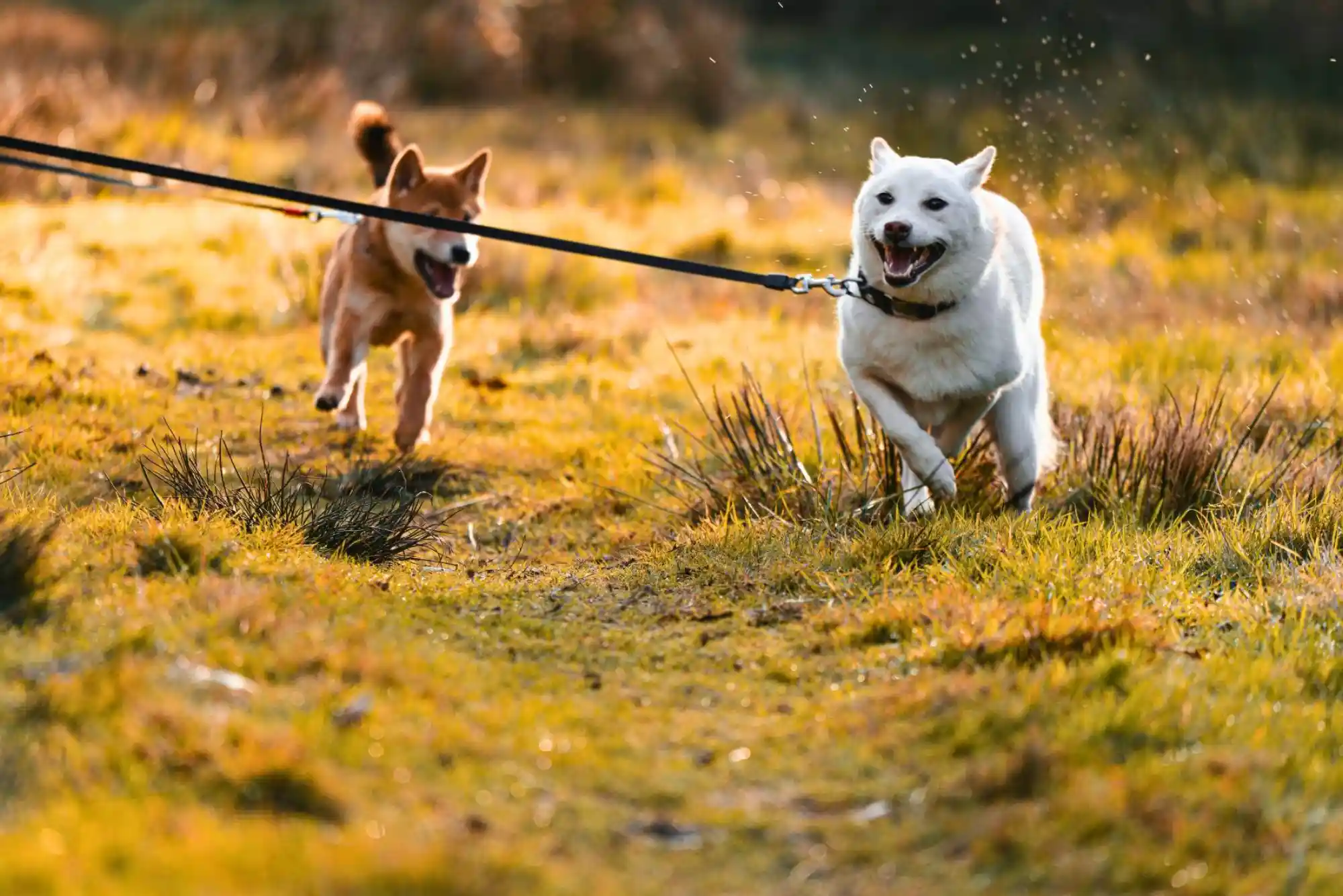
Have the handlers walk in the same general direction while keeping substantial distance between the dogs. They should be able to notice each other without being forced to interact.
A parallel walk can be especially useful because movement creates a natural activity. The dogs are not simply standing face-to-face and staring at each other. Instead, they can gradually become comfortable sharing the same environment.
Watch each dog’s body language throughout the walk. Relaxed movement, normal sniffing, soft facial muscles, and the ability to look away can indicate that the dog is coping well.
If one dog becomes stiff, intensely focused, repeatedly lunges, or cannot disengage, increase the distance. Do not insist on moving closer simply because several minutes have passed.
The recent guidance from Whole Dog Journal similarly recommends neutral territory, calm handlers, gradual exposure, and careful attention to body language.
Gradually Reduce the Distance
Once both dogs appear comfortable at their starting distance, the handlers can gradually move closer. This should happen slowly rather than in one large movement.
Continue walking instead of stopping immediately for a greeting. Allow the dogs to become accustomed to each other’s presence while maintaining enough space for comfortable movement.
If both dogs remain relaxed, reduce the distance again. If either dog becomes tense, return to the previous distance and continue walking.
This process teaches the dogs that being near another dog does not automatically mean conflict. Over several repetitions, the presence of the other dog can become less exciting and less threatening.
Patience is especially important with adult dogs. Some dogs may become comfortable within one session, while others need several controlled meetings. The relationship should develop according to their behavior rather than an artificial timetable.
Allow a Brief Sniff When Both Dogs Are Calm
When both dogs are relaxed and able to disengage from one another, you can consider a brief greeting. Keep the leashes controlled but avoid creating unnecessary tension.
Allow the dogs to approach in a curved or natural manner when possible. Avoid dragging them directly toward each other’s faces. A brief sniff can provide useful social information without requiring prolonged interaction.
After a few seconds, calmly move the dogs apart and continue walking. This gives them a break and prevents excitement from building too quickly.
A short interaction that ends calmly is more useful than a long interaction that becomes overwhelming. Adopt a Pet’s guidance similarly recommends brief exposure and breaks during introductions.
Learn to Read Dog Body Language
Understanding body language is essential when learning how to introduce two adult dogs on neutral territory without fighting. Dogs often communicate discomfort before a conflict occurs.
A relaxed dog may move naturally, sniff the ground, glance away, and maintain a loose posture. The dog may also investigate its surroundings rather than remaining intensely focused on the other animal.
Warning signs can include sudden stiffness, prolonged staring, freezing, raised hackles, repeated growling, lunging, snapping, or attempts to escape. These signals should not be ignored.
Growling should not automatically be punished. It can provide useful information that a dog is uncomfortable. Instead, calmly create more distance and allow the dog to settle.
The purpose of watching body language is not to predict exactly what a dog will do. It is to recognize changes early enough to prevent escalation.
Avoid Common Introduction Mistakes
Many problems occur because owners rush the first meeting. Two dogs may appear friendly from a distance, yet struggle when placed immediately beside each other.
Another common mistake is introducing the dogs inside the resident dog’s home. The resident dog may feel responsible for protecting its familiar environment. Toys, beds, food bowls, and other resources can add additional pressure.
Allowing dogs to “work it out” is also risky. Uncontrolled conflict can cause injuries and may create negative associations that make future meetings harder. Orange County’s guidance specifically advises against simply throwing unfamiliar dogs together and hoping they resolve the situation themselves.
Avoid tight leash handling as well. A handler who constantly pulls or shortens the leash can increase physical tension. Maintain control while giving the dog enough room to move naturally.
Most importantly, do not force contact. If either dog needs more distance, respect that signal and slow down.
Moving From Neutral Territory to the Home
A successful outdoor meeting does not automatically mean the dogs are ready to share a house. The home introduces additional challenges.
Before bringing the dogs inside, remove valuable toys, bones, food, and other resources. Prepare separate areas where each dog can rest without being disturbed.
The first time they enter the home together should remain supervised. Continue watching their body language instead of assuming that everything will remain calm.
Separate feeding areas can also reduce competition around meals. Each dog should have access to its own comfortable resting space.
Whole Dog Journal recommends separate resources, supervised interactions, and individual decompression areas when dogs begin sharing a home.
What If the Dogs Start Fighting?
If the dogs begin fighting, prioritize safety rather than trying to physically grab their collars. A serious fight can result in injuries to both dogs and humans.
Create distance using safe separation methods available to you. Once the dogs are separated, move them to different areas and allow them time to settle.
Do not immediately attempt another greeting. A fight indicates that the current setup moved too quickly or exceeded one dog’s comfort level.
If either dog has a history of aggression, repeated fights, severe reactivity, or unpredictable behavior, seek help from a qualified veterinary behaviorist or experienced reward-based behavior professional.
Professional assistance is particularly valuable because the underlying trigger may not be obvious to an owner. A behavior professional can assess the dogs individually and create a controlled introduction plan.
How Long Does It Take for Two Dogs to Get Along?
There is no universal timeline for two adult dogs to become comfortable together. Some dogs adjust quickly, while others need repeated sessions over several weeks.
The first objective should be peaceful coexistence rather than immediate play. A dog that calmly walks beside another dog has already made meaningful progress.
Continue using short, positive interactions. Gradually increase proximity and shared time only when both dogs remain relaxed.
Remember that adult dogs do not need to become best friends. A successful relationship can simply mean they can share space safely and comfortably.
How Can I Introduce Two Dogs at Home?
If a neutral outdoor meeting has gone well, transition to the home gradually. Start with supervision and keep valuable resources separated.
Allow both dogs to explore without forcing them to interact. Gates, separate rooms, and individual resting spaces can provide useful options.
Continue monitoring their behavior during meals, play, resting, and attention from family members. Problems can sometimes appear around resources even when the initial outdoor meeting was peaceful.
A structured transition gives both dogs time to understand their new social environment.
Can Two Adult Dogs Learn to Like Each Other?
Yes, many adult dogs can develop comfortable relationships after gradual introductions. However, the outcome depends on each dog’s temperament, history, environment, and individual triggers.
Some dogs become playful companions. Others simply learn to coexist peacefully. Both outcomes can be perfectly acceptable.
The most important factor is avoiding unnecessary pressure. Dogs need opportunities to move away, relax, investigate, and communicate naturally.
A slow introduction creates more opportunities for positive experiences and fewer opportunities for conflict.
Conclusion
Learning how to introduce two adult dogs on neutral territory without fighting is primarily about patience, preparation, and observation. Neutral territory removes some territorial pressure, while parallel walking gives both dogs space to adjust.